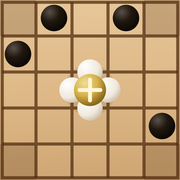
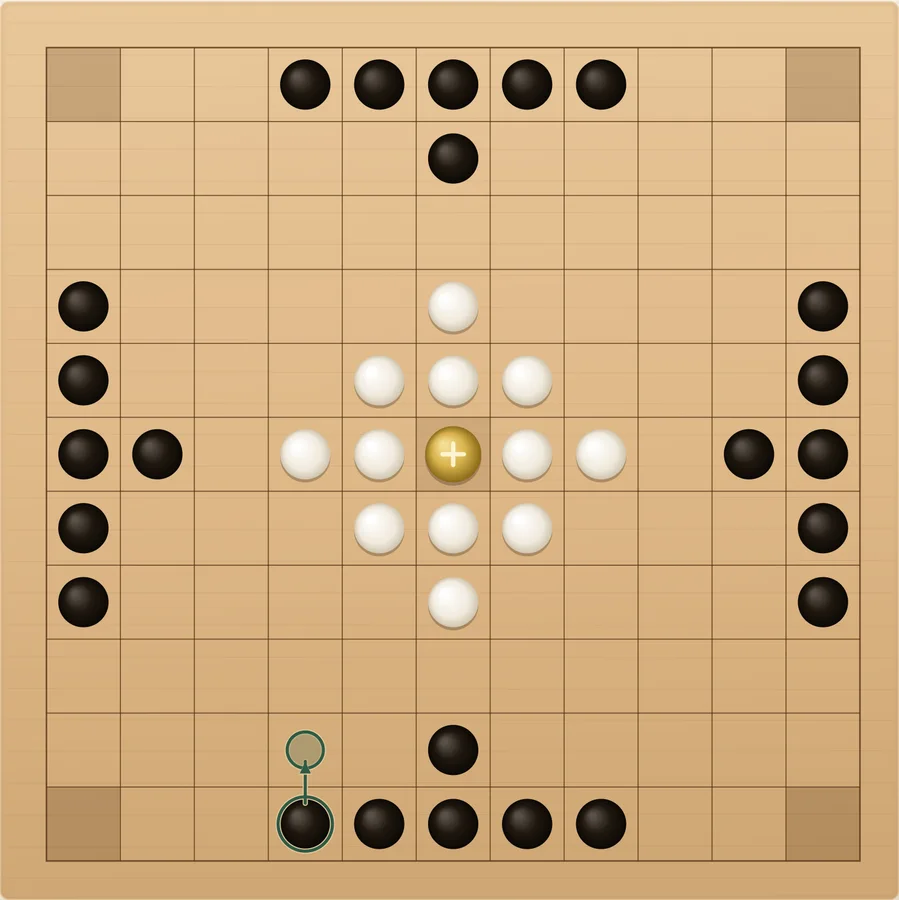
You do not need to memorize openings to play a sensible game. Start with a three-part scan: check the four corners, trace every clear row and column from the king, then look for soldiers that can be sandwiched on the next move. If movement or capture is still unclear, read the Hnefatafl rules first.
Use the Same Three-Part Scan Every Turn
- Check the corners. Is one corner unguarded, or can the king reach a clear line that leads to it?
- Check the king’s lanes. Follow his row and column until a piece blocks each direction. White wants room; Black wants barriers.
- Check every sandwich. Look one square beyond each soldier. A friendly piece, empty throne, or corner on the far side may turn the next move into a capture.
This order matters. A tempting capture is rarely worth allowing the king a direct route to a corner.
Attackers: Control Routes Before Chasing Pieces
Black has more pieces, but those pieces begin far from the king. Do not rush every attacker toward the centre. First place blockers on rows and columns that connect the king’s area to a corner. One attacker can guard an entire open line.
After at least three corners are covered, bring the outer pieces inward in layers. Keep one line behind the front line so White cannot break the whole net with a single capture. Advance opposite sides together; pressing only one edge gives the king room to escape on the other.
Defenders: Build One Escape Route at a Time
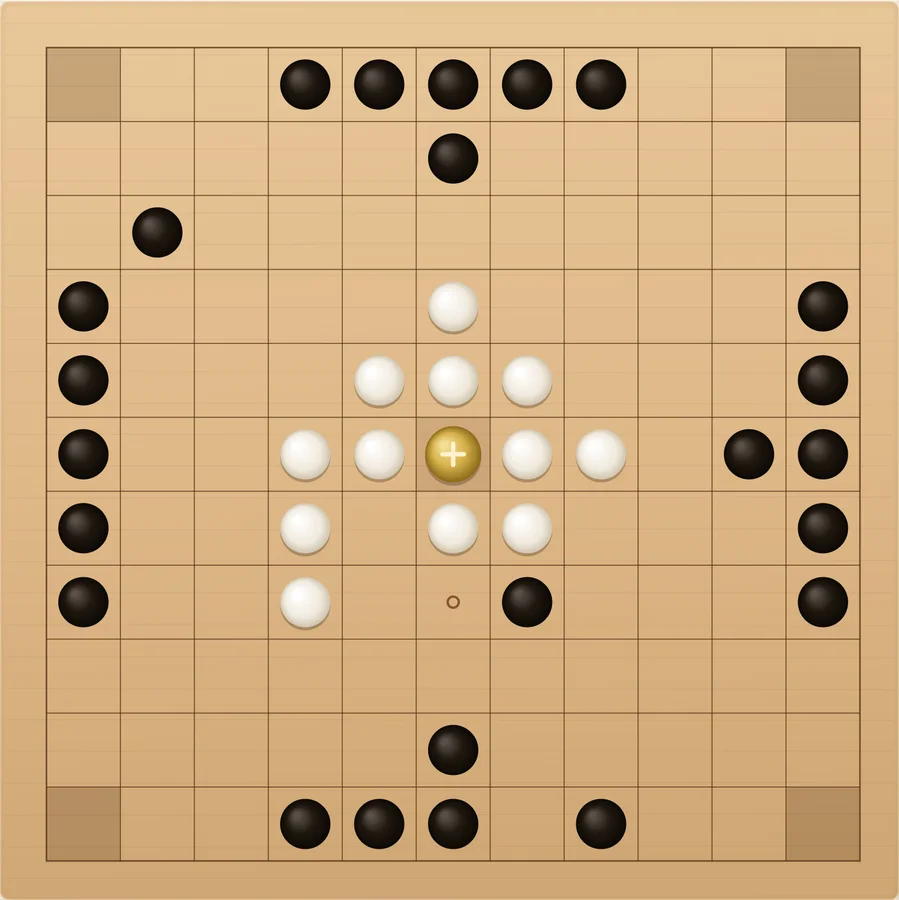
White does not need to open the whole board. Choose one promising corner and clear a route toward it. Move the outer defender first, then the inner defender, so the king does not step into a blocked lane. A second partial route is useful only if it forces Black to divide the net.
Count empty squares in front of the king, not just surviving defenders. A soldier that moves aside and creates a four-square lane may be more valuable than a soldier that captures but leaves the king boxed in. Keep at least one escort near the chosen route so it can block an attacker or complete a sandwich.
Do Not Pause Beside an Empty Throne
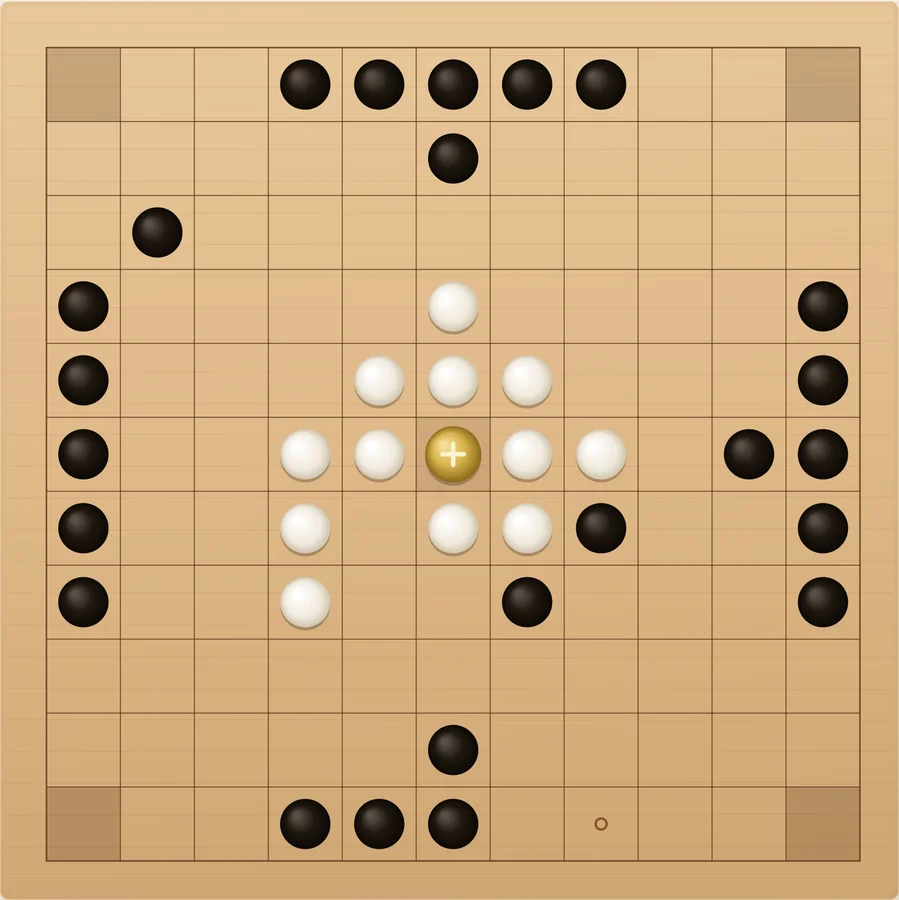
Once the king leaves the throne, that empty square becomes hostile to soldiers and can help either side complete a sandwich. More importantly, a king standing directly beside the empty throne needs only three attackers around him to be captured because the throne supplies the fourth hostile side.
White should move beside the throne only when the next part of the route is ready or a defender covers the exposed sides. Black should look for this moment before chasing an ordinary capture: occupying three adjacent squares can end the game immediately.
Trade Soldiers for Space, Not for Appearance
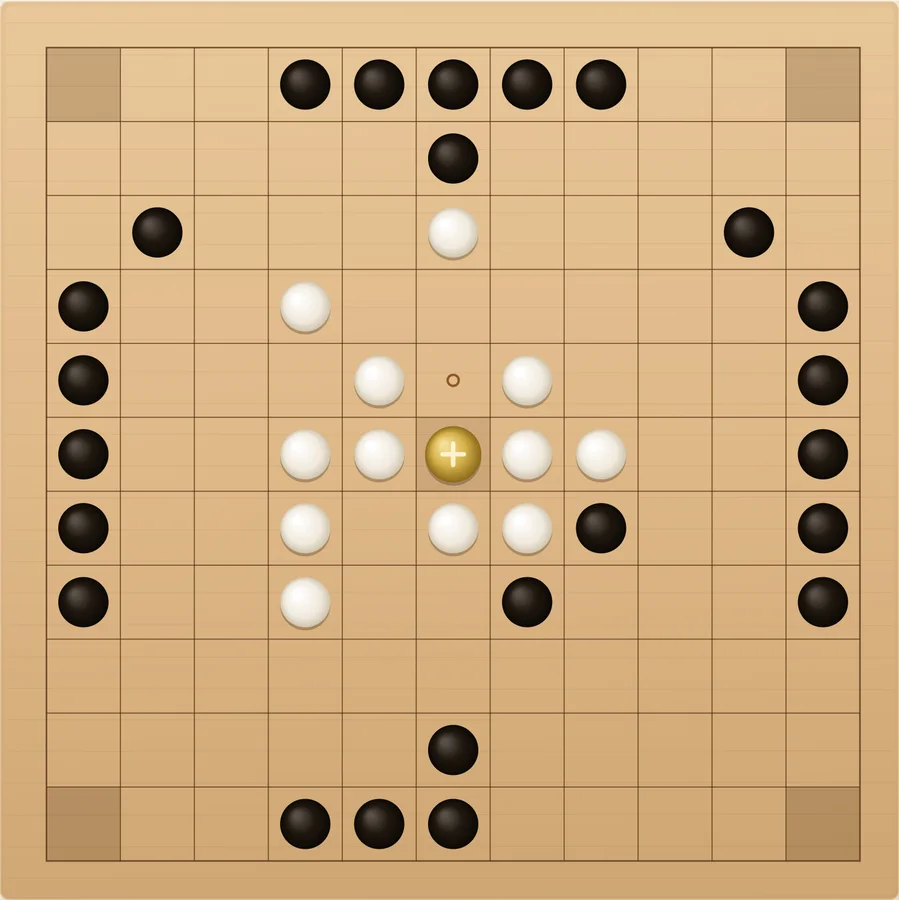
A good sacrifice changes the shape of the board. White may give up a defender to remove the final blocker from an escape lane or pull an attacker away from a corner. Black may allow one attacker to be captured if the reply closes a lane and leaves the king with fewer useful squares.
Before offering a soldier, name the gain: “This opens the king’s row,” “This forces Black off the corner line,” or “This lets the next attacker complete the surround.” If you cannot identify a concrete gain on the following move, the sacrifice is probably just a lost piece.
Use Hints After You Choose a Move
Think first, then ask for a hint. Decide what you would play and why before pressing the button. The hint uses the same AI level you selected, so it is a comparison with your current opponent rather than a perfect answer from a hidden stronger engine.
If the moves differ, compare their jobs. Does the hint cover a corner, open a king lane, create a sandwich, or stop an immediate threat? Use undo to try your move, then replay the position. One carefully compared decision teaches more than pressing Hint before every turn.
Common Strategic Mistakes
- Black chases the nearest defender. Check whether that chase opens a row or column to a corner.
- White keeps every defender beside the king. A solid cluster can become a cage that blocks the king’s own movement.
- Either side counts pieces but ignores lanes. Hnefatafl is often decided by one clear line, not by the material total.
- White moves the king beside the throne without a follow-up. That reduces the number of attackers needed to capture him.
- Black closes one side only. A strong net advances from several directions and keeps a second line behind it.
- A player takes a capture automatically. Recheck all four corners before accepting any exchange.
Hnefatafl Strategy FAQ
What should Black look for on the first move?
Find the clearest route from the king’s area to a corner and place an attacker where it controls that row or column. Early corner coverage is usually more urgent than an immediate central capture.
Should White move the king as soon as possible?
Not always. Move the king when at least the next part of the route is open and nearby defenders can cover him. Stepping beside the throne without a follow-up can make him easier to surround.
Which corner should White choose?
Prefer the corner with the fewest attackers controlling its approach and the longest continuous open lane from the king. Recheck after every black move; the best corner can change quickly.
When is a defender worth sacrificing?
Give up a defender when doing so opens a usable route for the king, removes a key corner guard, or forces a reply that breaks Black’s net. Do not trade a defender merely to make a capture.
How can Black tell whether the net is secure?
Trace a route from the king to each corner. A secure net has a blocker on every usable row or column and enough support that White cannot remove the only blocker with one sandwich.
How should a beginner practise these ideas?
Play one game as Black while checking corners before every move, then one as White while tracking a single escape route. Replay the first turn where your plan failed and test one alternative from that position.